Fuse Spark Awards Submission 2026:
Category:
Best Flooring Solution
Project:
Herman Miller – Chicago
End Date: November 2025
Project Overview
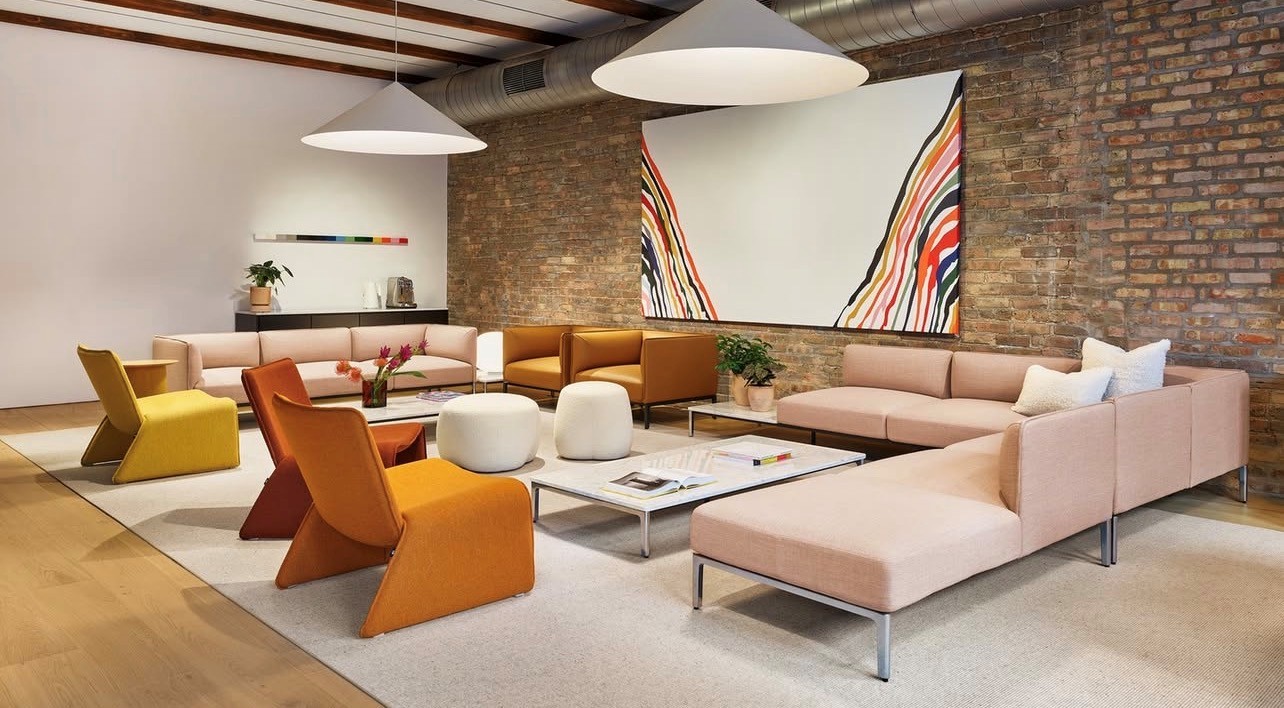
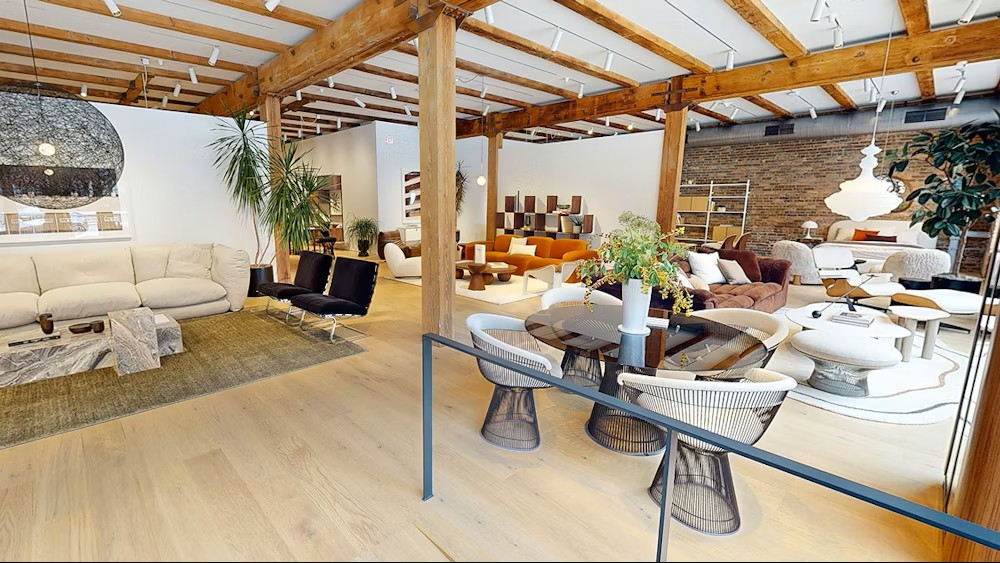
The Herman Miller Chicago project required a flooring solution that balanced performance, precision, and design intent in a highly curated workplace environment. The flooring was not treated as a background element, but as an integrated system that supported wayfinding, defined zones, and reinforced Herman Miller’s design-forward brand identity. The solution needed to seamlessly connect multiple materials and spaces while maintaining cohesion, durability, and architectural alignment throughout the project.
Design Challenge
The primary challenge was delivering a flooring solution that could visually articulate the space without disrupting its openness or flow. The design demanded careful coordination between flooring layouts, architectural elements, lighting, and circulation paths. Each area required differentiation while still feeling intentional and unified within the overall environment.
In a high-use commercial setting, the flooring also needed to perform long-term under daily wear while meeting strict aesthetic expectations. Transitions, tolerances, and pattern alignment had to be exact to preserve the integrity of the design.
Flooring Solution
The final solution incorporated a strategic mix of wood, resilient, rubber, and tile finishes to address both functional and visual requirements. Select materials were highlighted to anchor the space and reinforce key design moments, while supporting materials were used more subtly to maintain continuity.
A prefinished white oak wood floor was used as a defining element, providing warmth and visual grounding while integrating cleanly with surrounding finishes. In other areas, polished and sealed concrete surfaces were utilized to complement the modern aesthetic and support durability without additional surface preparation.
Rubber flooring and base systems were installed to enhance performance in high-traffic zones, while resilient flooring was used to maintain consistency across open work areas. Tile finishes were incorporated in restroom environments to support moisture performance and visual clarity, with careful attention to layout and alignment.
Execution and Craftsmanship
Execution was critical to the success of this project. The installation required tight tolerance, detailed layout coordination, and sequencing that allowed multiple trades to work efficiently without compromising finished areas.
Substrate preparation, floor buildup, and transitions between existing and new conditions were carefully managed to ensure long-term performance. Wood flooring was precisely cut and detailed at ramps, doorways, and floor outlets, while transitions between flooring types were executed seamlessly to preserve flow throughout the space.
Every seam, transition, and pattern alignment was completed with a high level of craftsmanship, ensuring the flooring solution matched the design intent exactly as envisioned.
Materials Utilized
Highlighted materials included products from Shaw and Roppe, along with Küberit transition systems, Daltile Color Wheel Arctic White Matte tile, and Mohawk Hot & Heavy Pebble 36″ x 36″ flooring. SikaBond T-55 adhesive was used to support secure installation and long-term performance.
Additional supporting materials included wood flooring systems, resilient flooring, floor preparation products, and complementary transition and adhesive systems selected to meet performance requirements while maintaining the overall design intent.
Why This Project Represents Best Flooring Solution
This project exemplifies Best Flooring Solution because the flooring was thoughtfully engineered to solve both aesthetic and functional challenges. The solution enhanced spatial definition, supported circulation, and reinforced brand identity while maintaining durability and constructability.
Rather than relying on excess or complexity, the success of this project came from intentional material selection, precise execution, and a deep understanding of how flooring interacts with architecture. The result is a cohesive, high-performing environment where flooring plays an essential role in shaping the experience of the space.
Nancy Thiel, founder and principal of Thiel Architecture + Design, is a licensed architect and an interior designer. With 40+ years’ experience working with luminaries in the architecture world, including Michael Graves, Robert A.M. Stern, and Rockwell Group, where she served as a studio leader, Thiel’s extensive portfolio includes single-family homes and multi-story residences, hotels, restaurants, retail, fitness clubs, offices, theaters, schools and shopping centers. She is a member of the AIA, holds NCARB certification and is a LEED accredited professional. Prior to her career in architecture, Thiel was a dancer and choreographer.
Thiel Architecture + Design is an award-winning multi-disciplinary architecture, interior design, planning, and product design firm with offices in CT and NY. The firm’s work focuses on high-end residential design as well as hospitality, contract, and retail projects. Thiel Architecture + Design’s work has been featured in Interior Design, Architype, New York and Connecticut Cottages and Gardens, Connecticut Magazine, Archello, and Fast Company magazines. In 2022, the firm received a Connecticut AIA Excellence award for Interior Architecture. Thiel earned a BA from Penn State University and her Master of Architecture degree from Syracuse University.